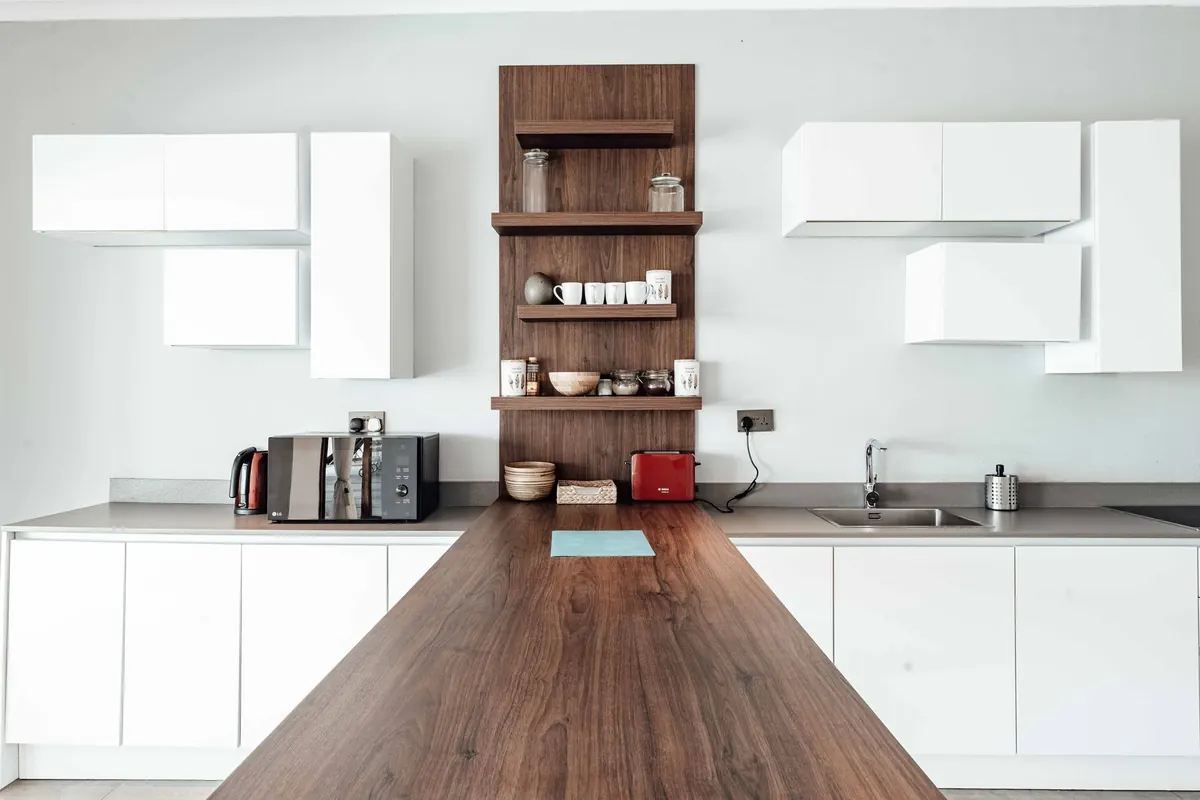
A British pantry is rarely a walk-in cupboard with labelled jars and a chalkboard. More often it is a 60cm base unit beside the oven, three shelves deep, with a bag of rice cakes balanced on top of the tinned tomatoes. The good news is that you do not need a weekend, a budget or matching containers to sort it. You need an afternoon, a bin bag, and enough honesty to admit that the preserved lemons from two summers ago are not going to be used.
Here is a method that works in a small kitchen, in one sitting, without emptying the whole room.
Get Set Up in Ten Minutes
Clear the worktop nearest the cupboard. Gather these first, so you are not wandering off mid-sort:
- a bin bag for anything out of date or spoiled
- a box for unopened, in-date food you will not eat — food banks and community fridges take most of it
- a box for things that live somewhere else: the baking tray that belongs with the pans, the dog biscuits, the batteries
- a damp cloth and a notebook or phone for the shopping list
If your pantry is a full floor-to-ceiling cupboard, work one shelf at a time. If it is a single base unit, empty it completely — it takes less time than you think.
Sort Ruthlessly, Shelf by Shelf
Start at the top and take everything out. For each item, ask one question: have I used this since last Christmas? Then check the date. Dried herbs and ground spices fade after a year or so — they will not harm you, they will simply stop tasting of much. Flour, oats and nuts go stale, and nuts can turn rancid. Tinned food keeps for years, but a dented or bulging tin goes straight in the bin.
Everything lands in one of three piles:
- Keep — usable, in date, and part of how you actually cook.
- Move — right food, wrong home. Tins for the other cupboard, lunchbox snacks for the shelf by the door.
- Let go — bin it, donate it, or give it to the neighbour who actually likes marmalade.
Wipe the shelves while they are empty. This is the only chance you will get for a while.
Zone by Shelf Height
This is the step most people skip, and it is the reason a tidy cupboard collapses within a fortnight. Shelves are not equal. Sort yours into bands by how easy they are to reach.
- Eye level: daily essentials. Tea, coffee, salt, cooking oil, the four or five spices you use every week.
- Waist to knee: heavy and bulky. Flour, rice, pasta, tins, potatoes, cereal boxes. Bending once a day is fine; lowering a 5kg bag of flour from above your head is not.
- Top shelf: light, long-life and occasional. Spare tea, baking parchment, napkins, the Christmas pudding, the third bag of icing sugar.
- Floor or bottom shelf: the genuinely heavy things — large bottles, sacks, the slow cooker you use twice a month.
If you share the kitchen, put things at the height of the person who uses them. Children's snacks at child height saves a lot of shouting.
Zone by Food Type Within Each Band
Once the bands are right, add horizontal logic. Group like with like so you can see at a glance what you own and what has run out: baking together, breakfast together, savoury cooking together, snacks together, drinks together. Try not to scatter one category across the cupboard. If you have three bags of porridge oats in three different places, you have probably bought porridge oats three times.
Decant selectively
Decanting works, but not for everything. Square containers waste less space than round ones, and clear ones show you when you are running low. Move flour, rice, pasta and cereal into them, and keep the packet instructions — cut them out and tape them to the jar, or photograph them. Leave anything you use rarely in its original packaging, where the date is printed and obvious.
Give spices their own small territory
A tiered rack or a small turntable on one shelf beats a door rack you cannot see into. Group by how you cook: the everyday four at the front, baking spices together, the rest behind. Label the lids if you decant, because cumin and coriander look identical at 6pm.
If you cannot see it, you will not use it — and it will quietly go out of date.
Make the Space Work Harder
You can roughly double the usable space in a small cupboard without buying a full storage system. Start with what you already have:
- Stack tins two high, but only where you can safely reach the top one.
- Use a turntable in any deep shelf — oils, vinegars, sauces, jars.
- Stand bags of rice or pasta upright in a spare cereal box so they stop slumping into the gap behind everything.
- Clip open bags with a peg and write the opening date on the clip.
- Use a shallow tray for small loose things: stock cubes, gravy granules, birthday candles, the odd sachet.
- Reserve the inside of the door for flat, light items only, and check it still closes. A door that springs open is worse than no storage at all.
Leave a hand's width of empty space at the front of each shelf. If a shelf only works when it is packed to the edge, you own too much of something — usually tinned tomatoes or stock cubes.
Keep It Working
The afternoon gets you a functional pantry. Five minutes a week keeps it that way. Before you write your shopping list, open the cupboard and look at it. Note what you have two of. Move the oldest packet to the front so it gets used next, and push anything that has drifted back into its wrong zone where it belongs.
One rule does most of the work: one in, one out. Buy a new jar of honey only when the old one is nearly finished, and put the new one behind it. Do that consistently and next January you will still be able to find the rice.
Photo: Keegan Checks / Pexels